
Armored Vehicle Certifications
& Ballistic Testing
ArmoredVehicles.com builds and certifies every armored vehicle to recognized ballistic standards, including NIJ, CEN EN 1063, VPAM, STANAG, and UL, then proves that protection with both third-party and in-house live-fire testing. Our group holds VR7 certification from Germany’s Beschussamt München and has passed United States Army evaluation at Aberdeen Proving Ground (APG). Over more than 30 years and across over 80 countries, our vehicles have a record of zero armor penetrations in service. This page documents the credentials we carry, how our technicians test, and how you can verify the results.
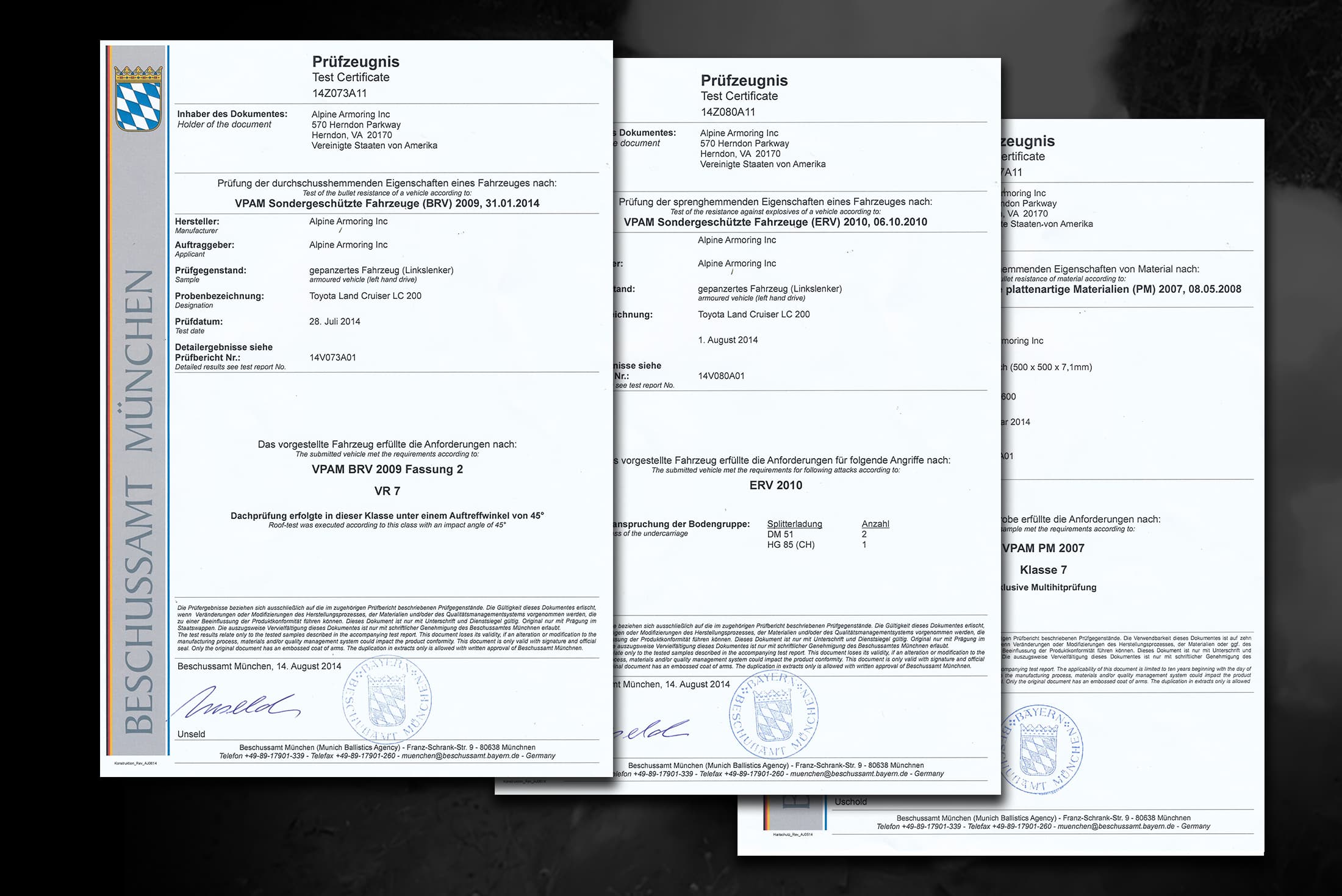
Our Ballistic Certifications
Independent, internationally recognized laboratories certify our armored vehicles, and those approvals cover the complete vehicle after conversion, not the raw materials alone. The credentials behind the ArmoredVehicles.com group vehicles include:
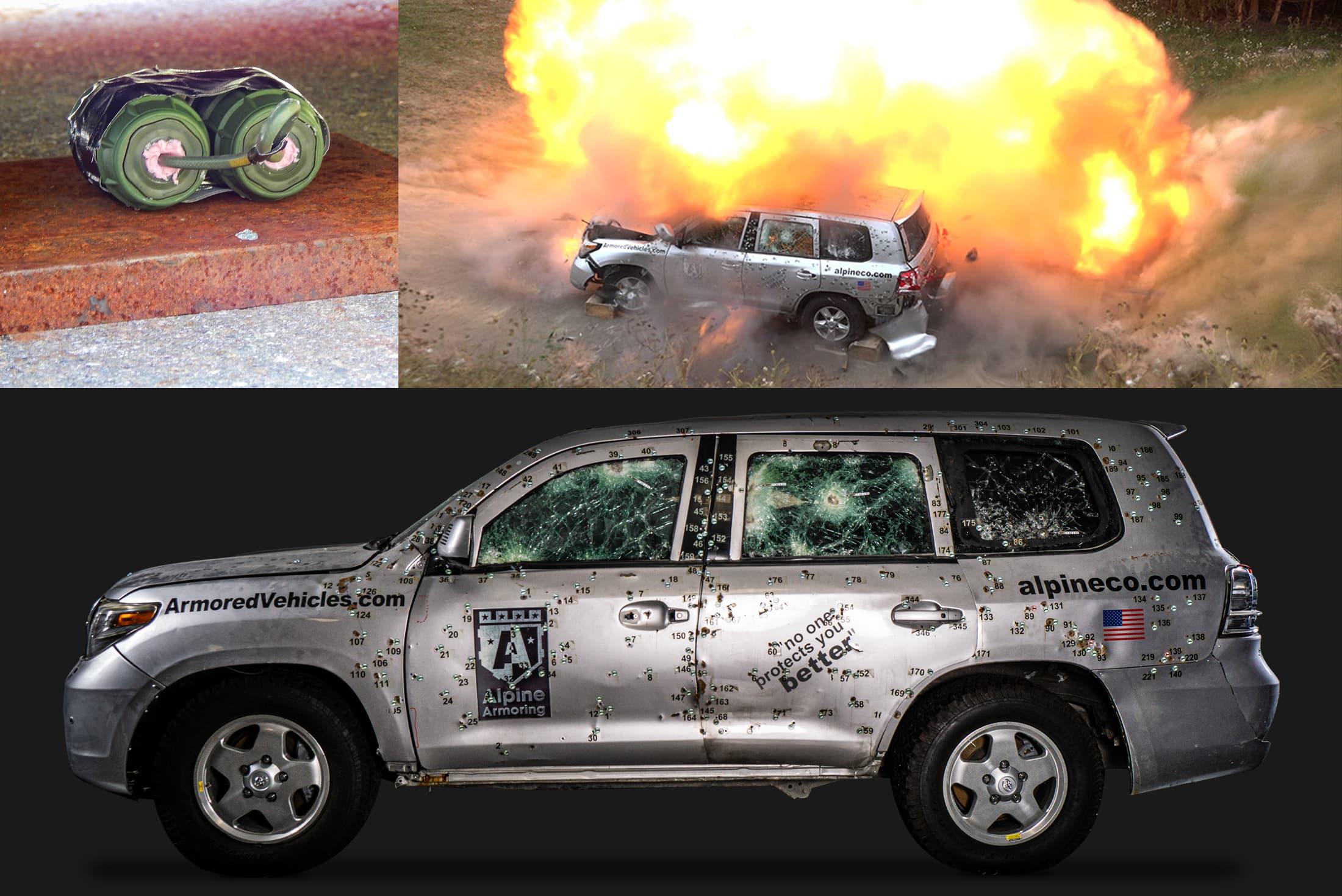
Beschussamt München (Germany)
A German government-approved ballistic laboratory. Our vehicles hold VR7 certification covering both BRV ballistic resistance and ERV blast resistance, one of the most demanding whole-vehicle protocols in the industry.
View the Beschussamt München certificates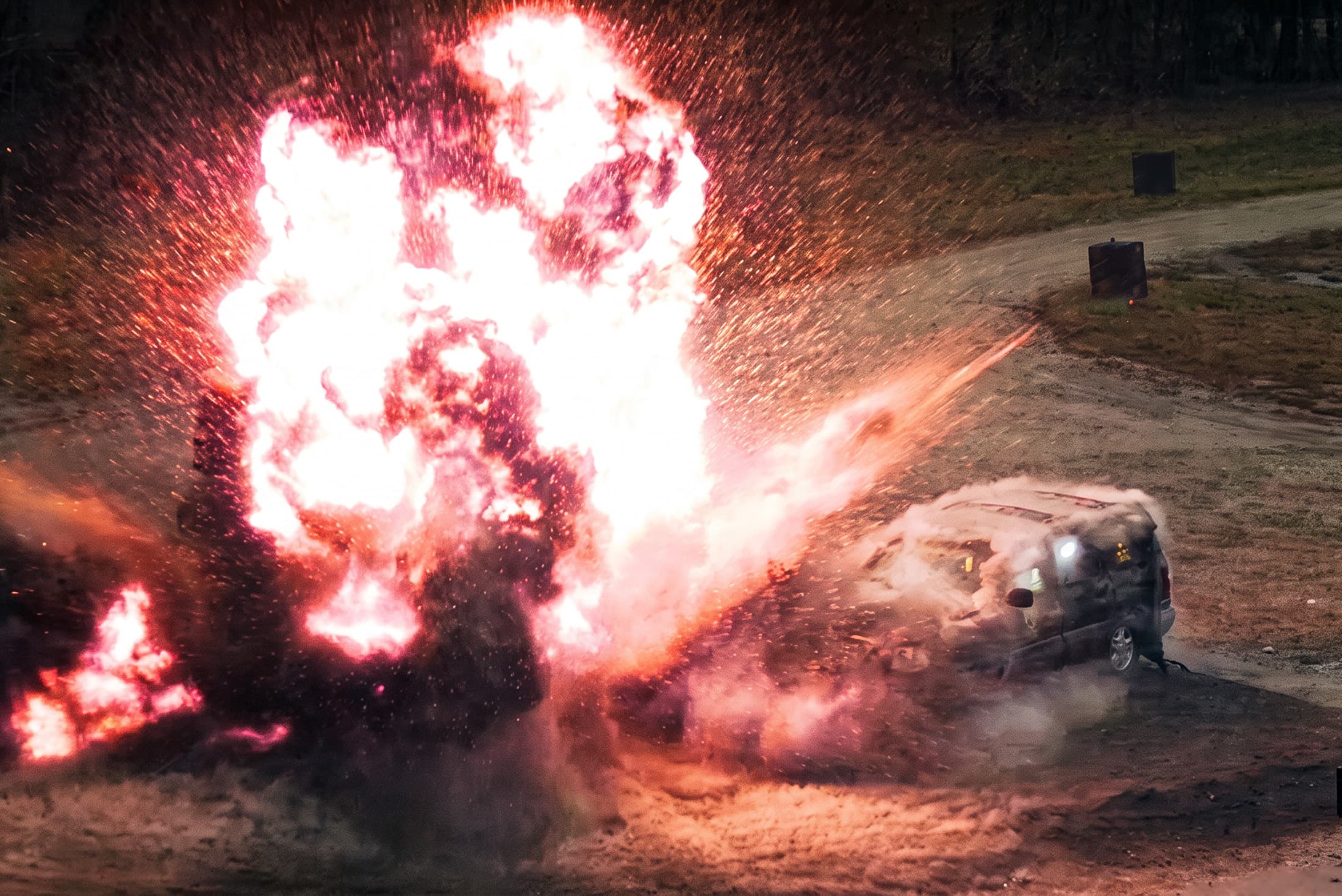
Aberdeen Proving Ground (APG)
Our armored SUVs have passed ballistic testing at APG, the Army facility that evaluates combat vehicle protection. APG fires rounds at set velocities, angles, and distances against the production vehicle, not a flat panel.
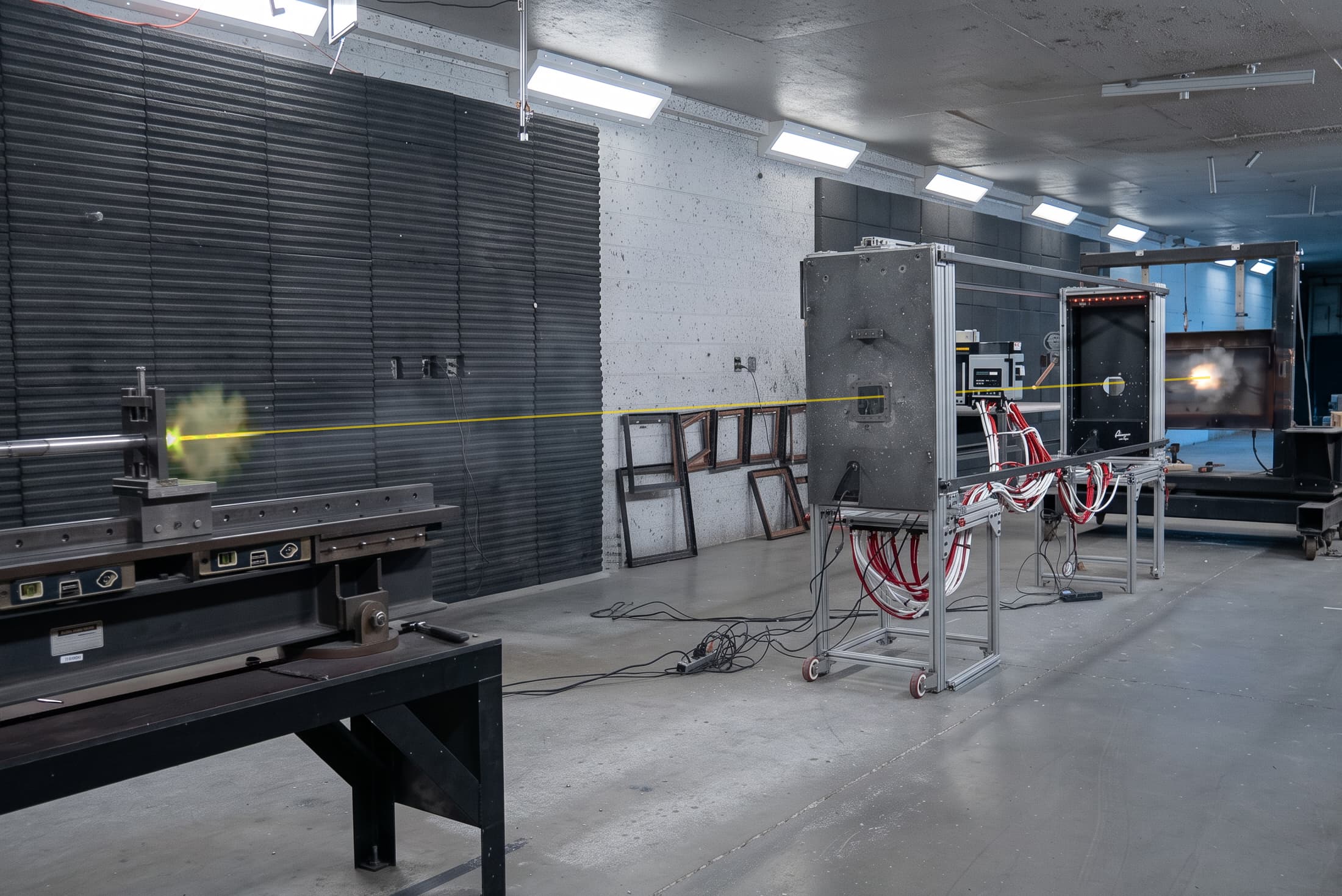
Independent laboratories
Additional approvals from accredited third-party labs validate specific materials and finished builds against NIJ, CEN, and UL standards.
GSA contract holder
As a long-term General Services Administration (GSA) contract holder, our group supplies armored vehicles to United States government agencies under federal procurement standards.
Read more on our About pageIn‑House and Third‑Party Live‑Fire Testing
ArmoredVehicles.com runs both third-party laboratory certification and our own live-fire program, and our in-house results meet or exceed the minimums set by the certifying agencies. We operate dedicated testing facilities in Virginia and Texas, where technicians fire live rounds at materials and at complete vehicles under controlled conditions.
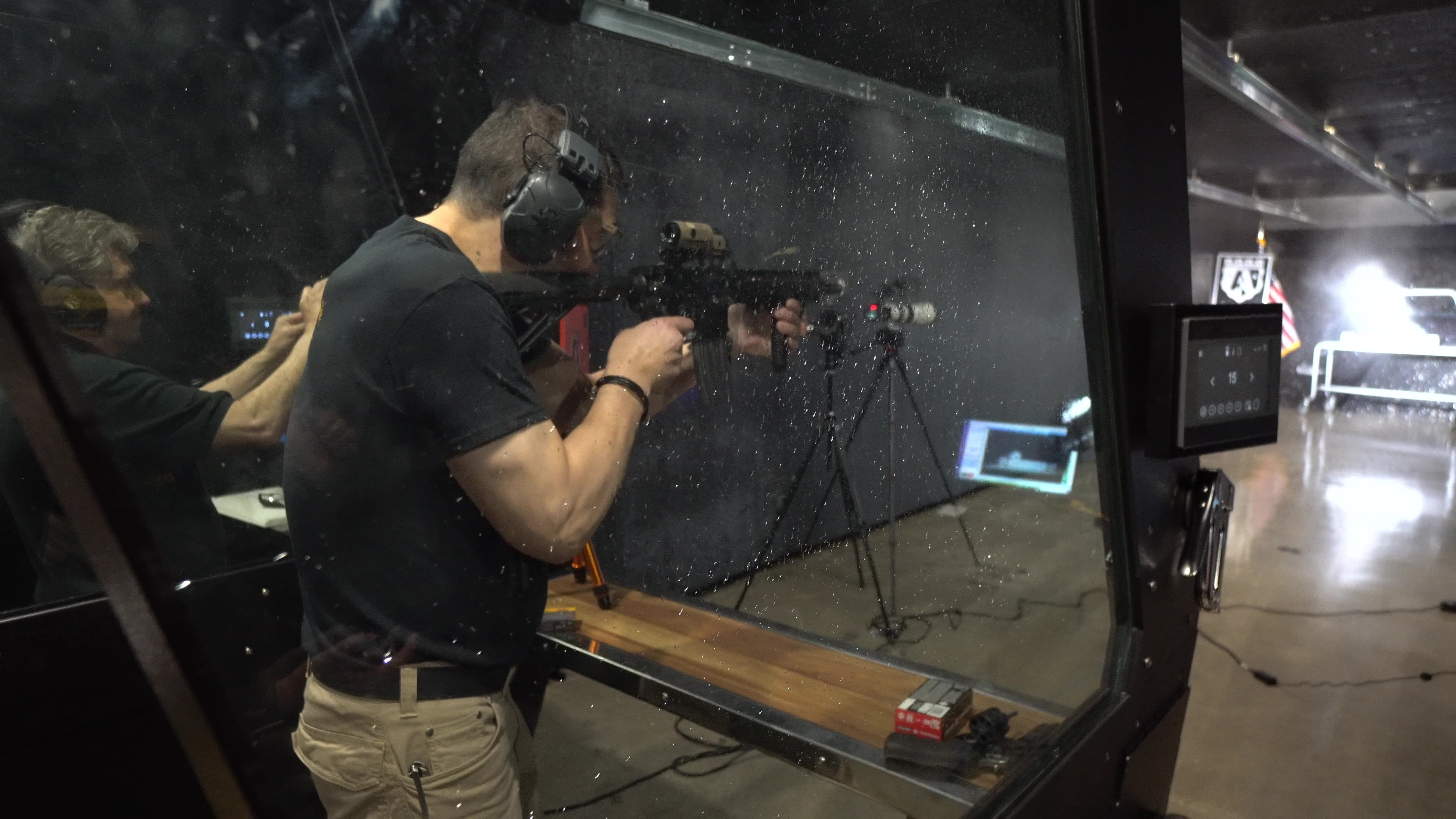
Material Testing
Our technicians test opaque armor (ballistic steel, ceramic, polyethylene, and aramid composites) and transparent armor (bullet-resistant glass) against rifle and handgun threats. We fire calibers including 5.56x45mm, 7.62x39mm, 7.62x51mm, 7.62x54mmR, and 7.62x63mm to record how many rounds, at what angle, and at what bullet weight a material stops before penetration. For glass, we test under cold-dry and hot-humid conditions, fire multiple rounds in tight triangular groupings, and fire on aged glass showing early delamination to confirm it still performs.
Whole-Vehicle Testing
We test the finished, assembled vehicle, not flat panels alone. Firing on a complete build confirms that joints, overlaps, door frames, and glass-to-body interfaces defeat the rated threat, the same principle behind VPAM whole-vehicle certification. Recent examples include a live-fire test on an armored Tesla Model S (watch the footage) and ongoing evaluation of our police and SWAT platforms.
“Testing an assembled vehicle shows what the client actually drives, because the seams, overlaps, and glass-to-body transitions are where protection holds or fails. A material sample alone cannot show that.“
The Ballistic Standards We Build To
Our A-level protection scale maps to the major international standards, so a single A-number gives you the NIJ, CEN, and VPAM equivalents at a glance. Protection runs from A1 (CEN B1 / NIJ HG1) against handguns up to A12 (CEN B7+ / NIJ RF3+) against .50 BMG armor-piercing rounds. For the full breakdown of calibers, velocities, and rating equivalents, see our ballistic protection levels and ammunition chart and our guide to armor protection levels by region.
| Standard | Coverage | Range |
|---|---|---|
| NIJ | National Institute of Justice — the U.S. national standard. | HG1–RF3 |
| CEN EN 1063 | The European standard for armored vehicles and security glazing. | BR1–BR7 |
| VPAM | The German association standard, tested on the complete vehicle. | VR1–VR10 |
| STANAG 4569 / UL 752 | The NATO and Underwriters Laboratories standards referenced in government procurement. | Varies by protocol |
- NIJHG1–RF3
National Institute of Justice — the U.S. national standard.
- CEN EN 1063BR1–BR7
The European standard for armored vehicles and security glazing.
- VPAMVR1–VR10
The German association standard, tested on the complete vehicle.
- STANAG 4569 / UL 752Varies by protocol
The NATO and Underwriters Laboratories standards referenced in government procurement.
Field-Proven Protection
Laboratory certification matters, and the strongest proof comes from vehicles that have taken live fire in the field and protected the people inside. Our group reports zero instances of armor penetration across thousands of vehicles delivered to more than 80 countries.
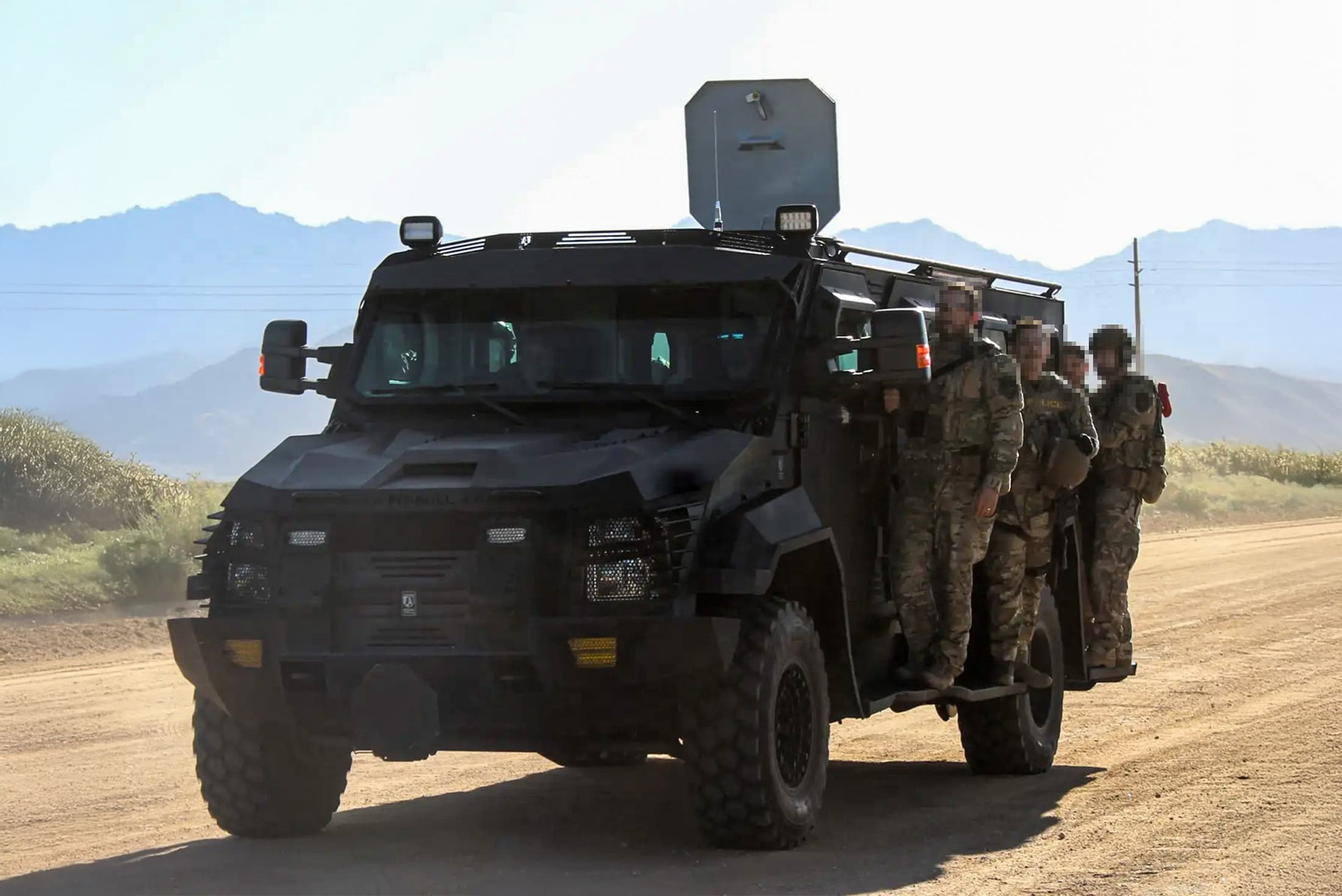
A Bullhead City (Arizona) Police Department Pointer SWAT van took live rounds with officers inside and recorded no penetrations. The agency operates that same vehicle today. Review more verified cases on our real-world deployments page.
Why Certifications Matter for Procurement
For government, diplomatic, and institutional buyers, third-party certification separates verifiable protection from a manufacturer’s claim. Any armored vehicle purchase should start with one question: where was this armor tested, and by whom?
“Our clients’ security teams need a protection result they can verify against a recognized standard, not a number we assigned ourselves. That is why we send vehicles to Aberdeen Proving Ground and to Beschussamt München for testing.”
Recognized certification also supports export compliance, since many countries require proof of ballistic protection from an approved authority before import, and higher-rated or weapon-modified vehicles may fall under ITAR or BIS export licensing. For destination rules, see our guide to international armored vehicle regulations. To match a certified protection level to your own risk, review our executive protection vehicle selection framework.
Request Our Certification Records
ArmoredVehicles.com provides documentation, protection-level specifications, and testing records for any vehicle on request. Contact our team to request certificates, confirm a specific standard, or arrange a facility visit. For quick answers on certification and protection levels, see our armored vehicle FAQ.