







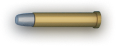
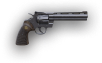
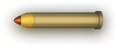
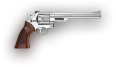
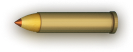
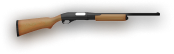
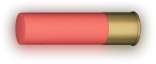
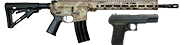

Ballistic Protection Levels & Ammunition Comparison Chart

ArmoredVehicles.com
WeaponWeapon
LevelsLevels
ProjectileProjectile
No one protects you better.
Name
Caliber
Class
StanagStanag
ULUL
NijNij
CenCen
Weight±
Type
Velocity±
Compare
Weapon A1
.38 Special
9 x 29mmR
Revolver
-
1
A1
HG1
BR1
125 grains8.09 grams
FMJ
Full Metal Jacket
1,075 ft/s (328 m/s)
Bullet Level 1
Weapon A2
9mm Luger
9 x 19mm
Handgun
-
1
A2
HG1
BR2
124 grains15.55 grams
FMJ/RN
Full Metal Jacket / Round Nose
1,305 ft/s (398 m/s)
Bullet Level 2
Weapon A3
.357 Magnum
9 x 33mmR
Revolver
-
2
A3
HG1
BR3
158 grains10.23 grams
FMJ/JSP
Full Metal Jacket / Jacketed Soft Point
1,430 ft/s (436 m/s)
Bullet Level 3
Weapon A4
.44 Magnum
11 x 33mmR
Revolver
-
3
A4
HG2
BR4
240 grains15.55 grams
JHP
Jacketed Hollow Point
1,430 ft/s (436 m/s)
Bullet Level 4
Weapon AS
Shotgun
12 Gauge
Shotgun
-
4
ASG
HG2+
SG2
436 grains28.25 grams
Slug
1,650 ft/s (503 m/s)
Bullet Level 5
Weapon A5
300AAC BlackoutTokarev
7.62 x 35mm7.62 x 25mm
CarbineHandgun
I
5
A5
RF1
BR4+
84 grains5.50 grams125 grains9.10 grams
FMJLCSJ
Full Metal Jacket
2,185 ft/s (666 m/s)1,600 ft/s (488 m/s)
Bullet Level 6
Weapon A6
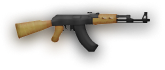
AK-47/Kalashnikov
7.62 x 39mm
Rifle
I
5
A6
RF1
BR5
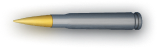
120 grains7.77 grams
FMJ
Full Metal Jacket
2,380 ft/s (725 m/s)
Bullet Level 7
Weapon A7
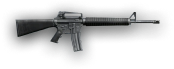
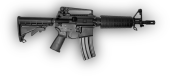
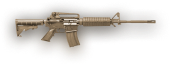
M4/M16
5.56 x 45mm (M193)
Carbine
I
5
A7
RF1
BR5
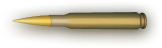
56 grains3.63 grams
FMJ/BT
Full Metal Jacket / Boattail Bullet
3,210 ft/s (978 m/s)
Bullet Level 8
Weapon A8
M4/M16
5.56 x 45mm NATO(SS109)
Carbine
I
5
A8
RF1
BR5
62 grains4 grams
FMJ/BT
Full Metal Jacket / Boattail Bullet
3,110 ft/s (948 m/s)
Bullet Level 9
Weapon A9
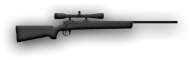
Remington 700
.308 or 7.62 x 51mm(M80 Ball)
Rifle
I
8
A9
RF2
BR6+
149 grains9.65 grams
FMJ Ball
Full Metal Jacket
2,780 ft/s (847 m/s)
Bullet Level 10
Weapon A10
AK-47M4
7.62 x 39mm API BZ5.56 x 45mm GT AP (M855)
RifleCarbine
II
9
A10
RF2
BR7
122/62 grains7.90/4.02 grams
API/PB/HCGT/AP/BT
Armor Piercing Incendiary/Pointed Bullet/Hard CoreGreen Tip AP/Armor Piercing/Boattail Bullet
2,395 ft/s (730 m/s)3,020 ft/s (920 m/s)
Bullet Level 11
Weapon A11
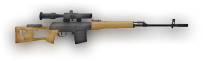
M1 GarandRemington 700Dragunov
7.62 x 63 M2 AP7.62 x 51 NATO AP7.62 x 54mmR API
RifleSniper RifleSniper Rifle
III
9
A11
RF3
BR7
165/151/154grains10.69/9.78/9.98grams
FMJ/PB/HCFMJ/PB/HC/WCAPI/PB/HC
Full Metal Jacket/Pointed Bullet/Hard CoreFull Metal Jacket/Pointed Bullet/Hard Core/WadcutterArmor Piercing Incendiary/Pointed Bullet/Hard Core
2,880 ft/s (878 m/s)2,690 ft/s (820 m/s)2,820 ft/s (860 m/s)
Bullet Level 12
Weapon A12
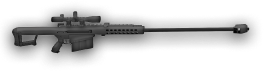
Barrett
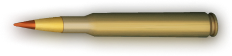
.50 BMG (12.7 x 99mm)
Rifle
III+
10+
A12
RF3+
BR7+
661 grains42.83 grams
FMJ/Ball
Full Metal Jacket/Ball
3,080 ft/s (940 m/s)
Bullet Level 13

How to Read This Chart

A ballistic chart cross-references weapon types, ammunition calibers, and impact velocities against certified protection ratings – showing you exactly what an armored vehicle can stop. Alpine Armoring uses this chart to help clients match their threat profile to the right level of protection, whether that means stopping a 9mm handgun round or a 7.62x51mm armor-piercing rifle round.

The logic is straightforward. Read the chart left to right: find the threat you need to defend against, then follow it across to the protection rating that defeats it. Each rating – whether it’s called B6, RF2, or VR7 – is a certification issued by an independent testing body confirming that the armor stopped that specific projectile, at that specific velocity, under controlled lab conditions.

If anything on the chart is unclear, Alpine Armoring’s team is available to walk you through it. More about our team →

“Choosing a protection level shouldn’t feel like guesswork. The chart gives you the facts – our job is to help you read them in the context of your actual risk.”

— Dan Diana, General Manager

Glossary of Standards

🇺🇸 North America

NIJ

U.S. Department of Justice

NIJ is the research and standards agency of the U.S. Department of Justice. It sets ballistic-resistance ratings used by American law enforcement and military procurement.

NIJ classifications range from HG1 and HG2 for handgun threats through RF1, RF2, and RF3 for progressively more powerful rifle and armor-piercing rounds. These are the most widely referenced protection benchmarks in North America.

🇪🇺 Europe & MENA

CEN

EN 1063 & EN 1522/1523

CEN is the European Committee for Standardization. EN 1063 governs the ballistic resistance of security glazing (transparent armor), while EN 1522 and EN 1523 cover opaque armored panels and their testing procedures.

CEN ratings run from BR1 (also written B1) through BR7, each corresponding to a specific firearm class. These are the dominant standards for civilian and diplomatic armored vehicles in Europe, the Middle East, and Latin America.

🇩🇪 Germany & Global

VPAM

German testing association

VPAM is a German-based association of independent test laboratories. It evaluates both ballistic resistance (BRV) and explosive resistance (ERV). Its VR scale runs from VR1 through VR14.

What makes VPAM different:

Testing is performed on the finished, assembled vehicle – not just on isolated material samples. A VPAM BRV certification confirms that the complete armoring system, including joints, overlaps, and glazing interfaces, defeats the rated threat under realistic conditions. Alpine Armoring is one of the few manufacturers whose vehicles have passed VPAM VR7 certification for both blast and ballistic resistance.

Frequently Asked Questions

What is the difference between NIJ and CEN standards?

NIJ is the U.S. standard developed for law-enforcement equipment and referenced for both body armor and vehicle armor in North American markets, while CEN (the BR-level system under EN 1063 and EN 1522/1523) is the European standard used as the benchmark for armored vehicles and security glazing across Europe, the Middle East, Africa, and Latin America — both test against specific calibers at specific velocities, but their scales don’t map one-to-one (NIJ HG2 aligns roughly with CEN BR4, and NIJ RF2 corresponds roughly to CEN B6), so for international deployments Alpine Armoring recommends certifying under both the NIJ standard relevant to U.S. procurement and the CEN or VPAM standard recognized in the operating region.

Does a higher armor rating always mean "better" for my vehicle?

No — a higher rating defeats a more powerful threat but adds significant weight, with each step up the scale meaning thicker ballistic steel and heavier glass that directly affects acceleration, braking distance, suspension life, fuel consumption, and (on EVs) driving range; the right rating matches your actual threat environment, since specifying B7-level protection where B4 would be sufficient adds hundreds of kilograms of unnecessary weight and can compromise occupant safety by reducing the vehicle’s ability to accelerate away from danger — Alpine Armoring’s protection specialists conduct confidential threat assessments to match the right level to each client’s situation, no more and no less.

What is the difference between transparent and opaque armor?

Opaque armor is the ballistic steel, composite, and aramid panels hidden behind body panels, inside door cavities, under the floor, and around the roof pillars — these can be layered with relatively few constraints beyond weight and cabin space; transparent armor is the ballistic glass in windows, windshields, and partition screens, which must achieve the same protection rating as the opaque panels while remaining clear, and at B6 and above can be 60–80mm thick and weigh several times more than a standard automotive window, making it one of the most technically demanding components of any armored vehicle — a vehicle is only as protected as its weakest point, so when reading the chart confirm a rating applies to both opaque and transparent armor (Alpine Armoring certifies both to the same standard on every build).

Need help choosing the right protection level?

Alpine Armoring’s team conducts confidential threat assessments to match each client’s risk profile to the right protection — no more, no less.

Request a Threat AssessmentBrowse available armored vehicles in stock